Uncategorised
Harnessing AI to Assist Humans: Bidding Farewell to Inaccessible Tacit Knowledge
As artificial intelligence (AI) continues to evolve and integrate into various facets of our lives, the key to maximizing its potential lies in how we harness it to assist and enhance human capabilities rather than replace them.
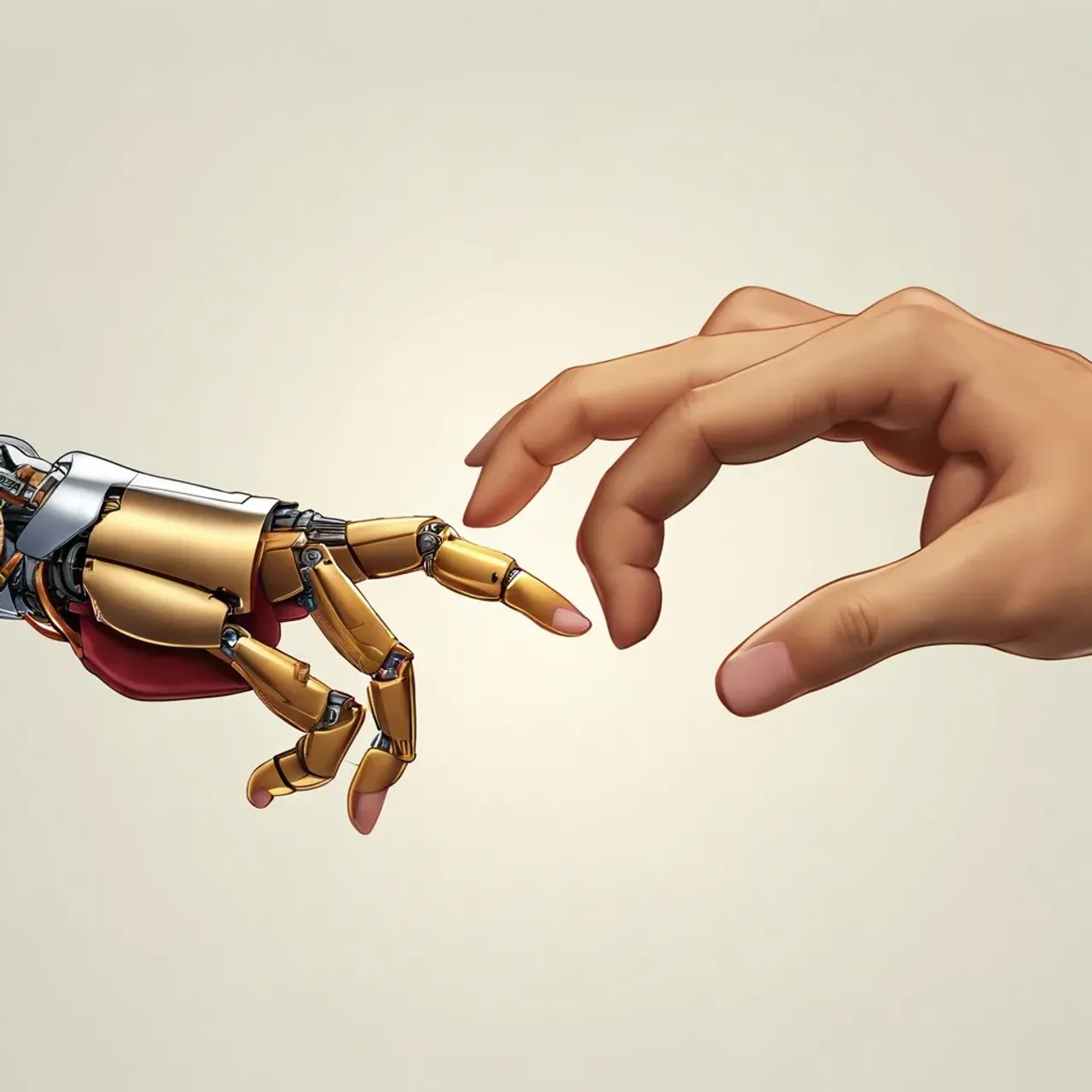
As artificial intelligence (AI) continues to evolve and integrate into various facets of our lives, the key to maximizing its potential lies in how we harness it to assist and enhance human capabilities rather than replace them. This approach not only aligns with preserving the intrinsic value of human thought but also paves the way for more reliable, consistent, and accurate outputs in various domains.
The Intrinsic Value of Human Thought
Human cognition is a complex interplay of creativity, emotional intelligence, critical thinking, ethical reasoning, adaptability, and collaboration. These qualities are difficult, if not impossible, for AI to fully replicate. However, AI can significantly enhance these human attributes by providing tools and insights that allow humans to perform at their best. This synergy is particularly crucial in areas requiring nuanced understanding and innovative problem-solving. I recently wrote a blog post entitled Are we at risk of undervaluing “thinking as a human”? that explores this in more detail.
A Contextual Use Case: Enhancing Bid Responses with AI
Consider a project aimed at using company knowledge bases to accelerate bid responses. By leveraging AI, we can ensure that responses are not only faster but also more reliable, consistent, and accurate.
Lets explore an AI-driven bid response workflow:
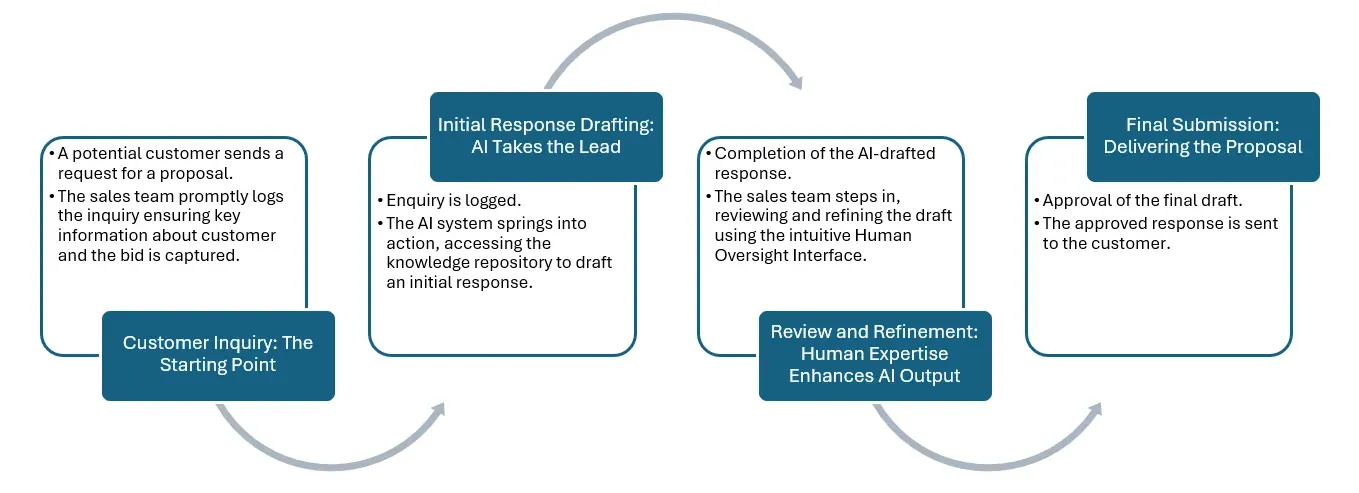
With the final stamp of approval, the response is sent out promptly. This efficient process ensures that customers receive timely and well-crafted proposals, improving the likelihood of successful bid proposals accurately aligning to the requirements in timely manner, both enriching and accelerating the the bid discussion process.
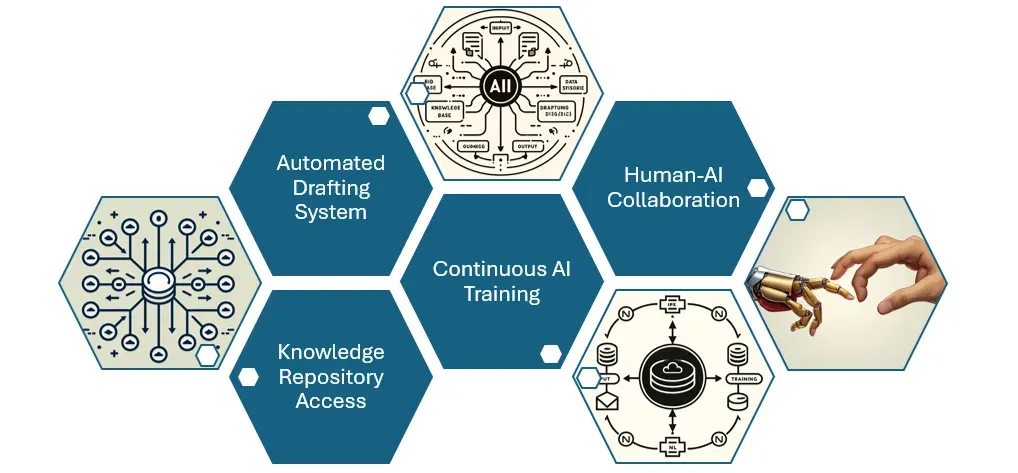
Here’s how this type of approach could enhance traditional methods:
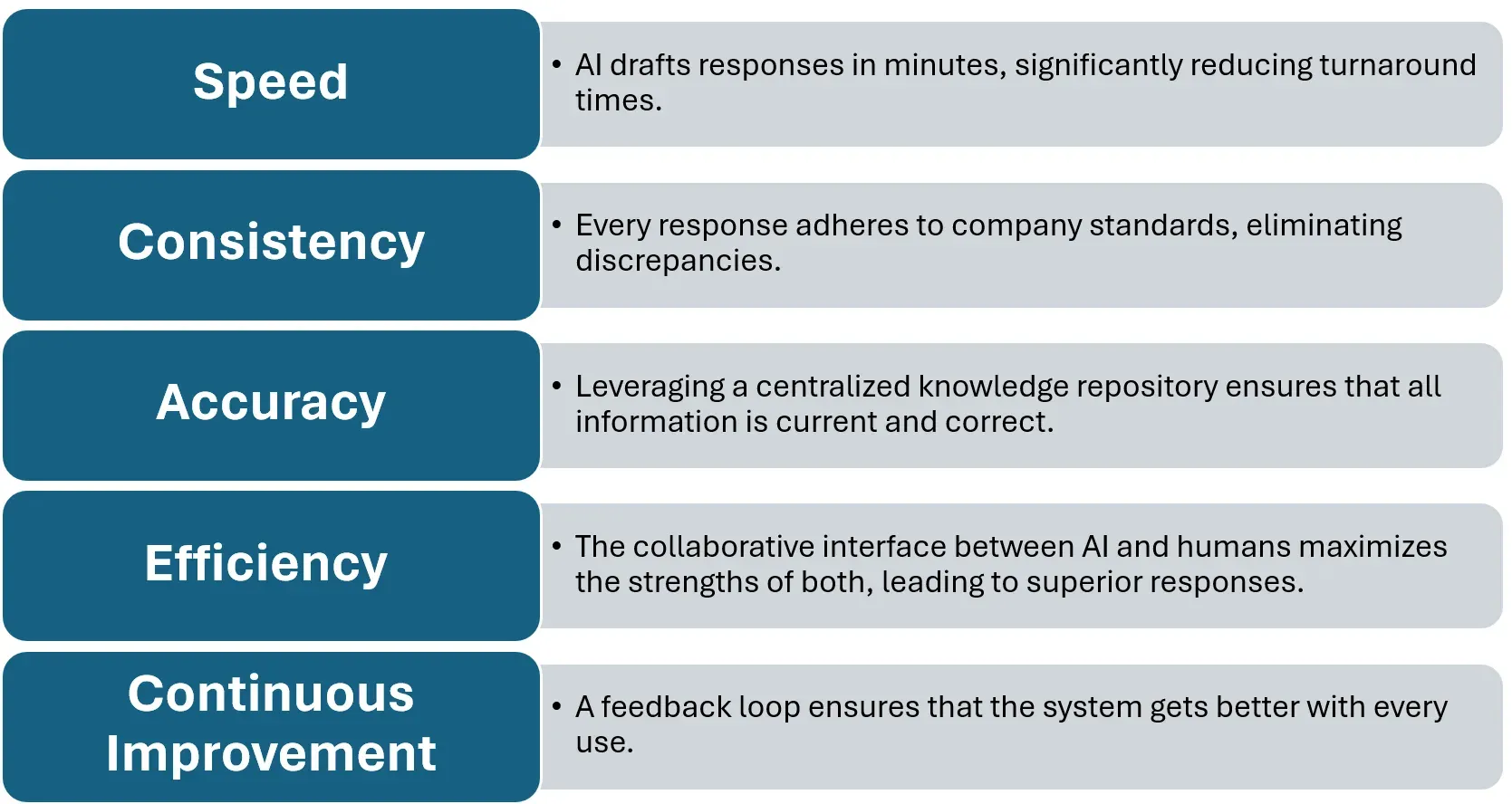
By collecting feedback on each response, the AI supported bid team become smarter and more effective over time, continually improving the quality of future drafts.
In conclusion, adopting this workflow means bid teams can respond to bids faster and with greater confidence, ultimately leading to more wins and business growth.
The Future of Human-AI Synergy

The future of AI in commerce and beyond lies in its ability to complement human skills. In the context of bid responses, AI can handle repetitive and data-intensive tasks, freeing humans to focus on strategic thinking, creativity, and relationship-building. This approach not only enhances efficiency but also ensures that the human touch, which is crucial in business dealings, remains central.
By embracing AI as an assistant rather than a replacement, we acknowledge and preserve the intrinsic value of human thought. This balanced perspective ensures that as AI advances, it does so in a way that uplifts and empowers human capabilities, driving collective progress in an increasingly AI-driven world.
Harnessing AI to assist humans represents a forward-thinking approach to technology integration. Endeavours such as enhancing bid responses with AI are examples of how we can achieve this synergy, leading to more effective, reliable, and human-centric outcomes. This vision not only justifies the endeavour but also sets a precedent for future initiatives that blend human intelligence with AI’s capabilities.
But Wait… What am I saying? And why do I feel uncomfortable saying it?

From an efficiency and value creation perspective, these concepts really excite me! However, I also recognise a feeling of discomfort that stems from handing off activity, thinking and responsibility to non-human, artificial agents. The blog post I mentioned earlier along with another one lingers in my mind:
In addition to this, the Agile Manifesto is also screaming out in my mind. What about “individuals and interactions over processes and tools”? What about “customer collaboration over contract negotiation”? There is something in what I am proposing that detracts from these principles. My feeling is that real human interaction is central and almost sacred in the space of commerce and collaborative value creation. Is what I’m proposing removing human element and agency from the upholding of these principles?
The more I explore AI, the more I recognise I am stirring up these voices that represent the discomfort that led me to set this up wundr.space in the first place. Well then lets continue to wundr together. That was the point. Keep open the discussion and invite these voices to the table.
Be on the look out for a follow up blog post where I will explore these concerns further.