Introspection and Reflection · Technology and AI
The Blind Men and the Elephant: Embracing AI to Understand Our Shared Humanity
In our digital age, polarized debates rage across internet platforms, often reducing complex human experiences to binary oppositions. Marcus Aurelius insightfully reflected, "Everything we hear is an opinion, not a fact. Everything we see is a perspective, not the truth." This profound observation invites us to consider our nature and the complexities of moral judgment, a theme mirrored in the parable of the blind men and the elephant.
In our digital age, polarized debates rage across internet platforms, often reducing complex human experiences to binary oppositions. Marcus Aurelius insightfully reflected, “Everything we hear is an opinion, not a fact. Everything we see is a perspective, not the truth.” This profound observation invites us to consider our nature and the complexities of moral judgment, a theme mirrored in the parable of the blind men and the elephant. As we delve into this story, let’s explore how AI can serve as a tool to bridge divides and enhance our collective understanding, rather than exacerbate our inherent biases.
The Parable of the Blind Men and the Elephant
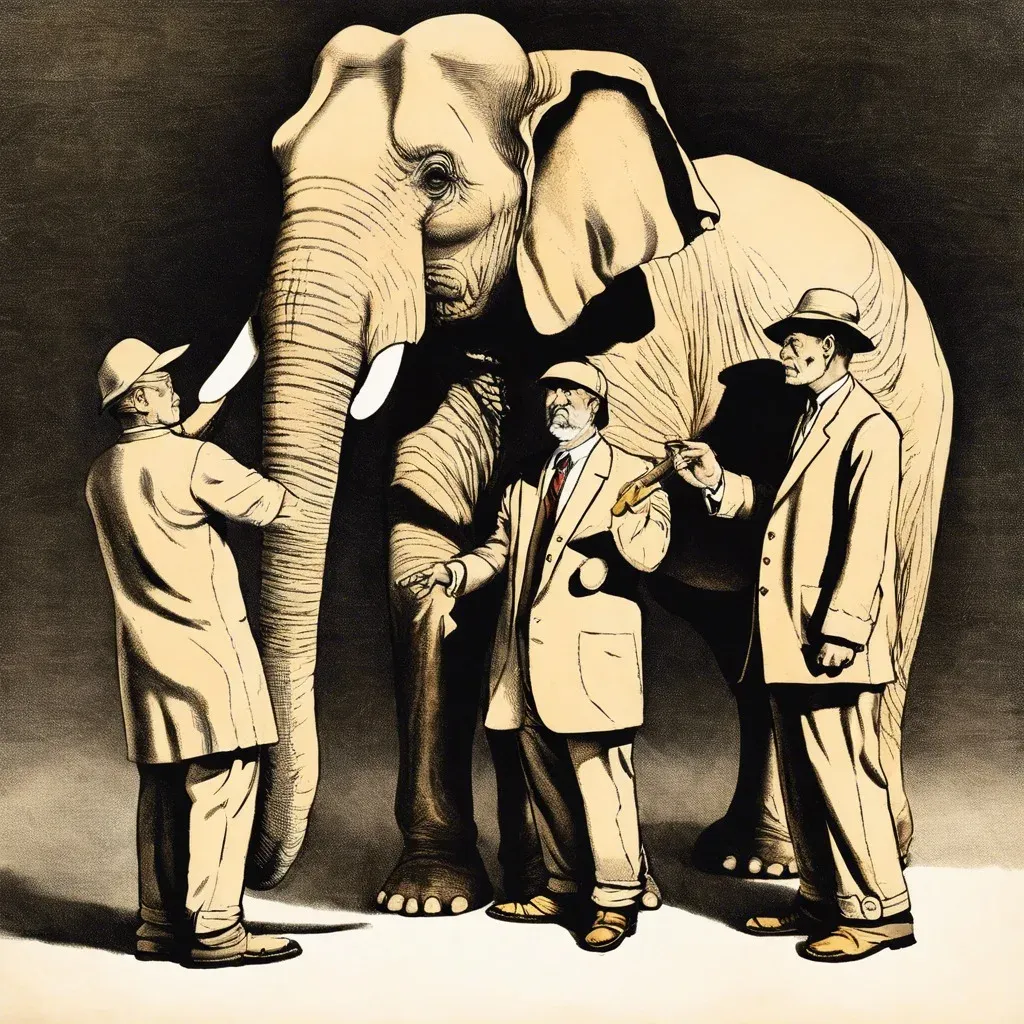
In the ancient parable, six blind men encounter an elephant for the first time. Each man touches a different part of the elephant’s body, but only one part; the side, the tusk, the trunk, the leg, the ear, the tail. Each man then declares the elephant is like a wall, a spear, a snake, a tree, a fan, or a rope, based on their limited experience. The men argue vehemently, each insisting their perception is the correct one, unable to agree on what an elephant truly is.
The Internet as the Unifier in Our Modern Parable

In the context of this story, imagine the internet and AI (its seedling of intelligence) as an entity capable of shedding light on the complete elephant. In today’s digital and polarized landscape, we are developing the tools to synthesizing diverse human perspectives to present a more holistic view of complex issues. Where individuals are limited by their biases—represented by the blind men’s singular experiences—AI has the potential to integrate and analyse vast amounts of data, providing a more nuanced perspective.
For example, when debating climate change, AI could offer a comprehensive view that includes economic, environmental, and social data from around the globe, helping to unify disparate and seemingly contradictory viewpoints. By doing so, AI can promote a deeper understanding among people, encouraging more informed and less polarized discussions.
Enriching the Full Picture
The fable of the blind men and the elephant not only teaches us about the limitations of individual perception but also highlights the profound potential of collective insight. When we combine our views, the world doesn’t just change; it deepens, broadens, and becomes more vivid—much like a picture transitioning from grayscale to full colour. This richness in perspective can be transformative, particularly when harnessed to address complex societal challenges.
Embracing Diversity for Holistic Solutions
When individuals from diverse backgrounds and disciplines share their unique viewpoints, they contribute to a more comprehensive understanding of any issue. This collaborative approach can lead to more innovative and effective solutions. For instance, in urban planning, integrating insights from environmental scientists, architects, sociologists, and local communities can lead to designs that are not only aesthetically pleasing but also environmentally sustainable and socially beneficial.
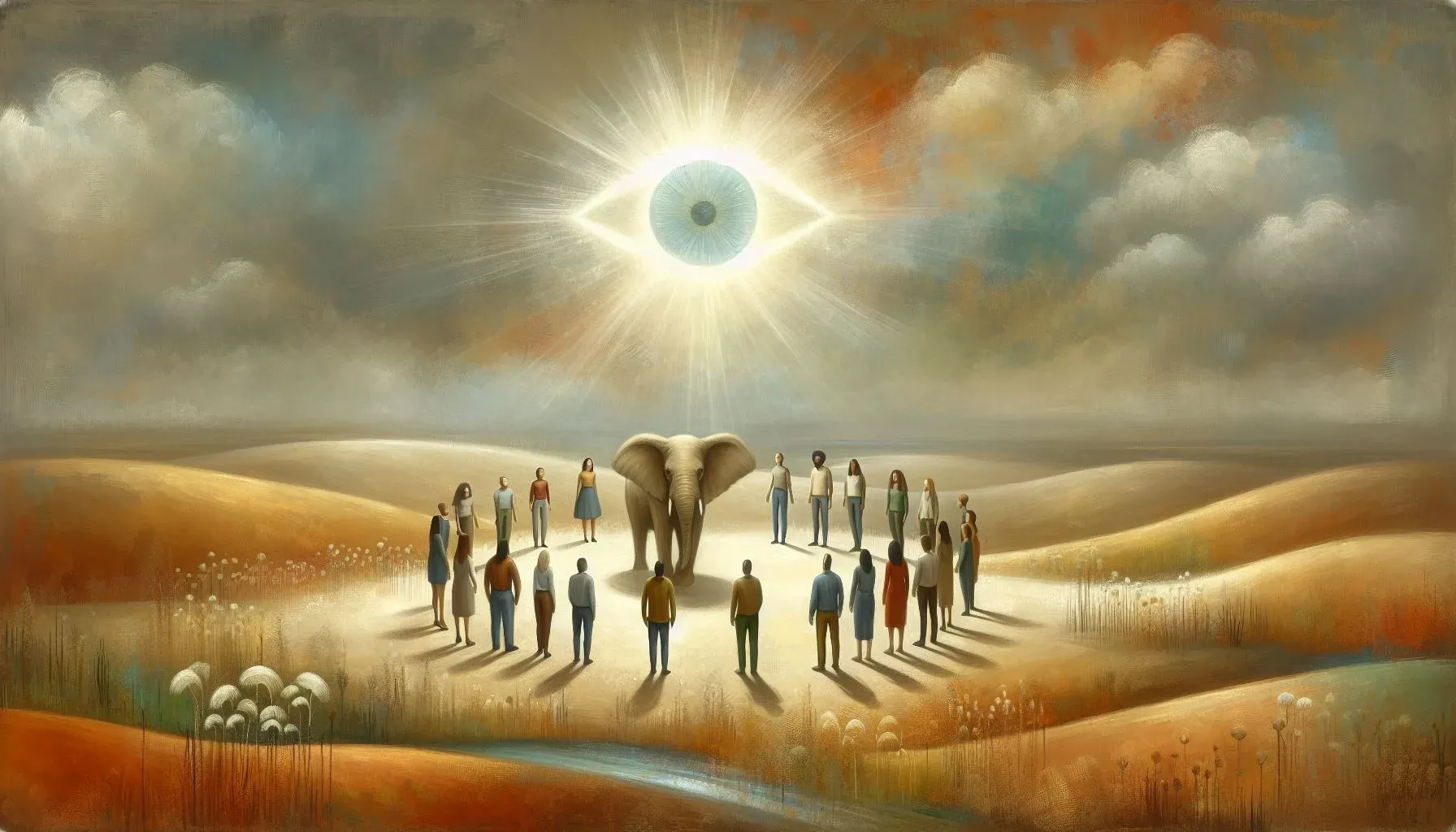
AI, when programmed to consider, synthesize and illuminate a wide array of human perspectives, can facilitate this process on a larger scale. By analysing data from various sources, AI can help identify patterns and solutions that might not be apparent through a single lens. This enriched view can guide us to better respond to global challenges like climate change, public health crises, and social inequality.
The Beauty of Full Colour Solutions
In the metaphorical sense, viewing problems in “full colour” allows us to appreciate the richness of human experience and the complexity of the world around us. This full-spectrum approach not only enriches our understanding but also enhances our ability to craft solutions that are more nuanced and culturally sensitive. Like a painter who blends multiple hues to capture the essence of a sunset, we, too, can blend diverse human experiences to capture the essence of truth in our collective endeavours.
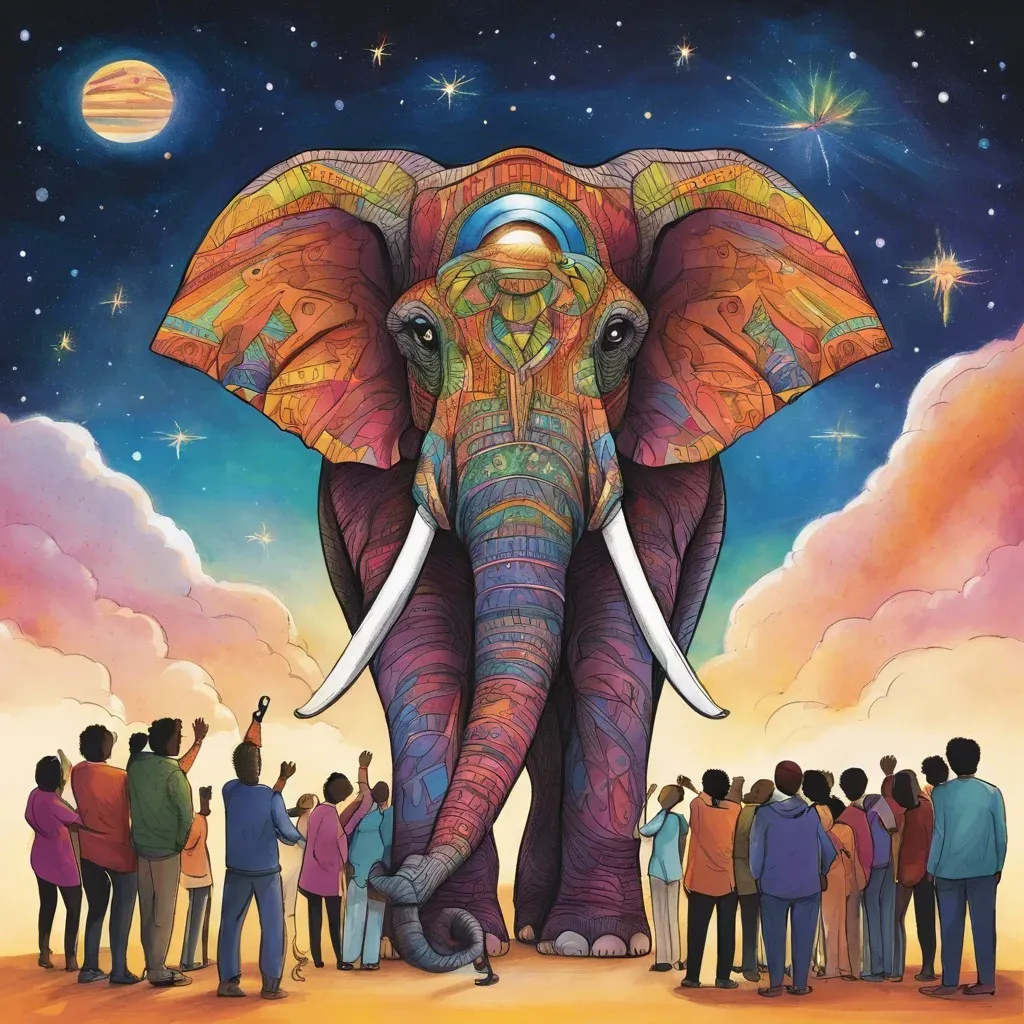
To harness AI’s potential as a force for unity and understanding, we must develop and guide it with a focus on ethical imperatives and compassion. It is not enough for AI to be powerful; it must also be programmed to seek out and emphasize shared values and common ground, fostering empathy and cooperation among its users.
Balancing Breadth and Depth
However, while a broad perspective is invaluable, it’s equally important to recognize the role of localized knowledge and solutions. Not every problem requires a global perspective; sometimes, the most effective responses are those that are deeply rooted in local contexts and cultures. Overly broad approaches can sometimes dilute the specific needs and values of communities, leading to solutions that are less effective or even counterproductive.
For example, conservation efforts that work well in one region may not suit another due to differences in ecological, cultural, or economic conditions. AI can help in distinguishing these nuances, analysing when and where a broad perspective is beneficial and when localized approaches should be prioritized.
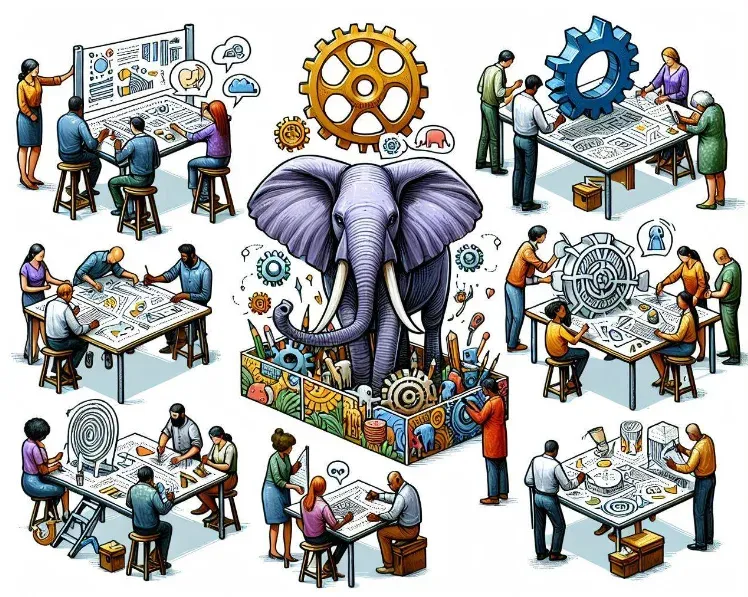
The Role of Compassion in AI Integration
As we continue to weave AI into the fabric of society, let’s strive to make it a tool that helps us see beyond our limited perspectives.
There is a piece of truth in everyone’s heart that is rooted in our individual experience and shaped further by truths that are upheld by those that influence us. But lets humble ourselves in the understanding of a greater truth that is unobtainable, that expands beyond our individual experiences and imagine that it is echoed in the parables and the seeds of wisdom passed down through generations that came before us.
If my piece of truth give rise my thoughts, feelings and emotional responses, then perhaps the greater truth give rise to my capacity to think, feel and find my place in the remarkable tapestry of ever lasting life.
By fostering an AI-enhanced understanding of our complex, shared reality, we can better navigate the moral landscape that Solzhenitsyn describes—one where good and evil are not segregated but intermingled in every human heart.
In this way, AI becomes not just a technological tool but a beacon of compassion, guiding us toward more empathetic and inclusive dialogues. Let us, therefore, commit to a future where technology helps us understand not only the elephant in the room but also each other.